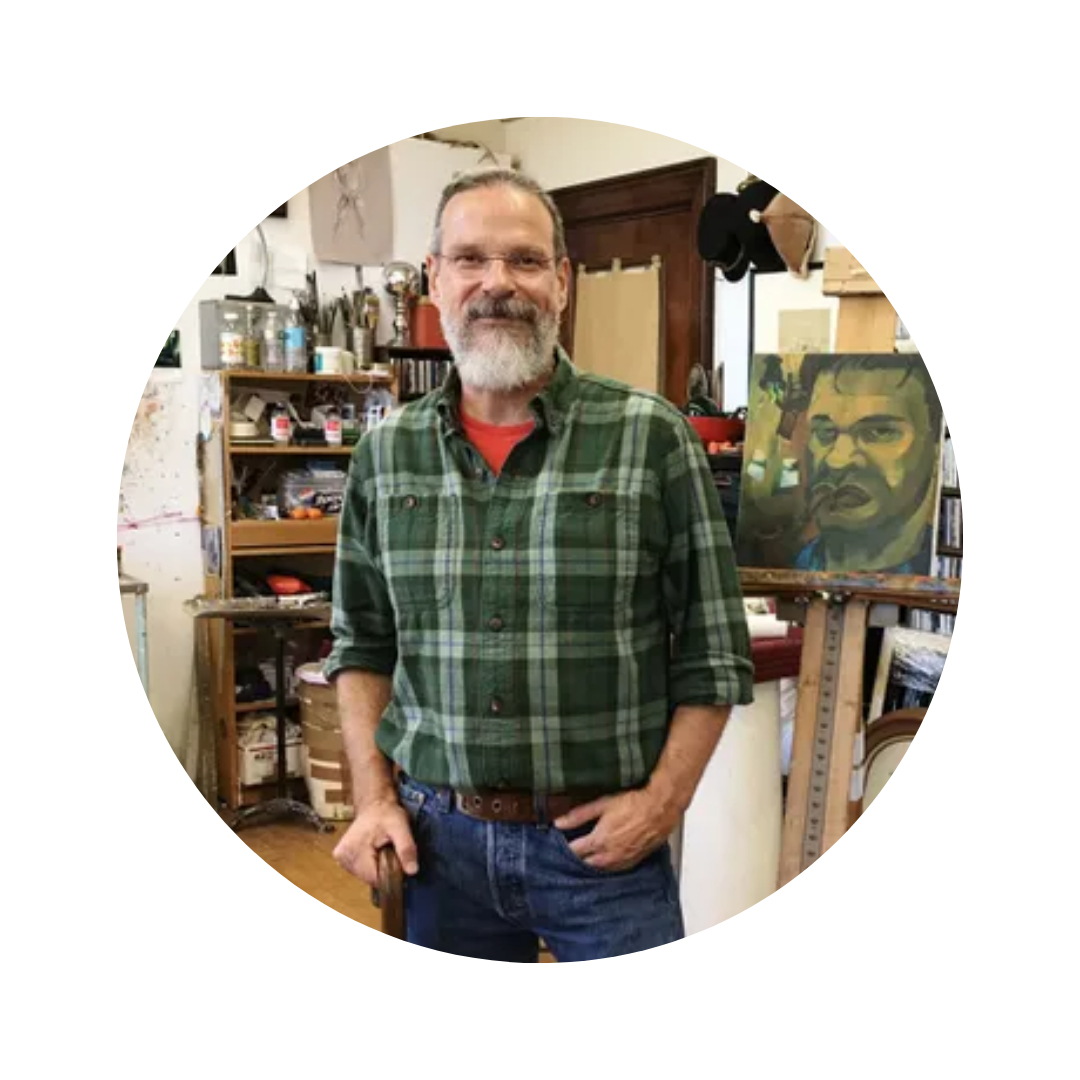
He had studied painting at Boston University but drifted from it in the years after graduation. Boston’s art world felt distant, and he found himself working in public health, behind a desk. But here, in Provincetown, he was surrounded by people who lived and breathed creative work. Slowly, he re-entered the rhythm of painting, not with the urgency of proving something, but with a curiosity about what he still had to say, and what painting still had to offer.
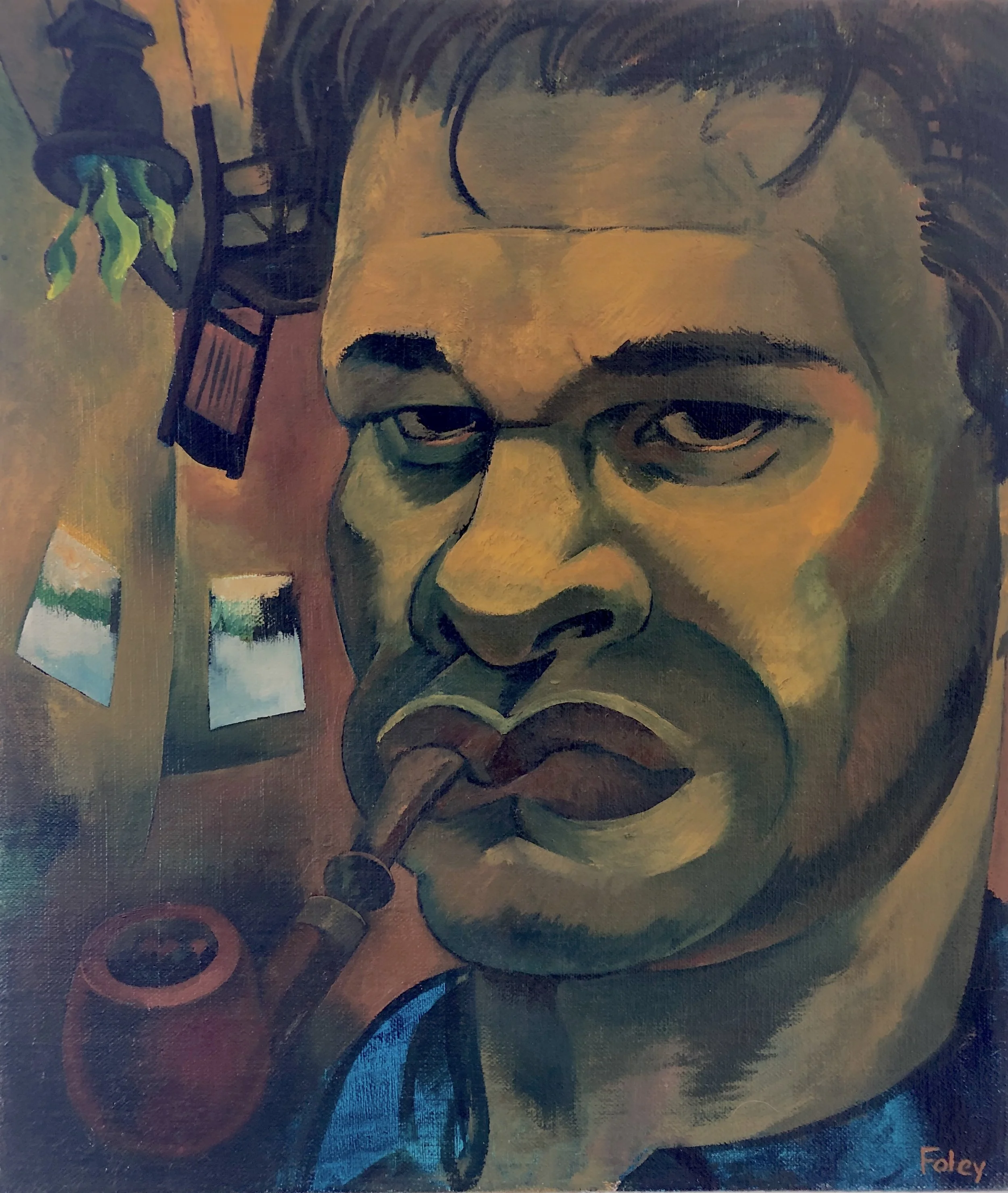
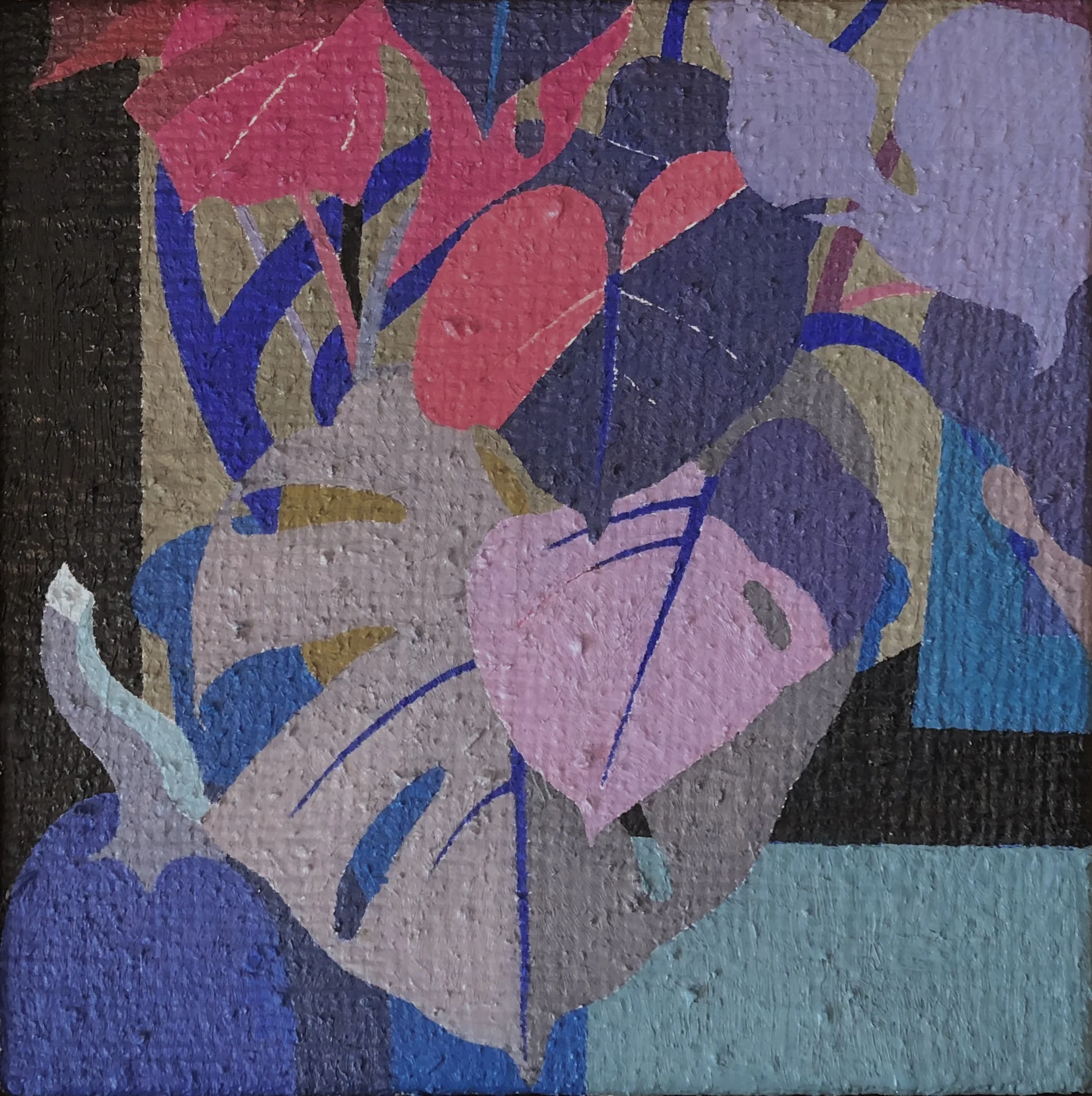
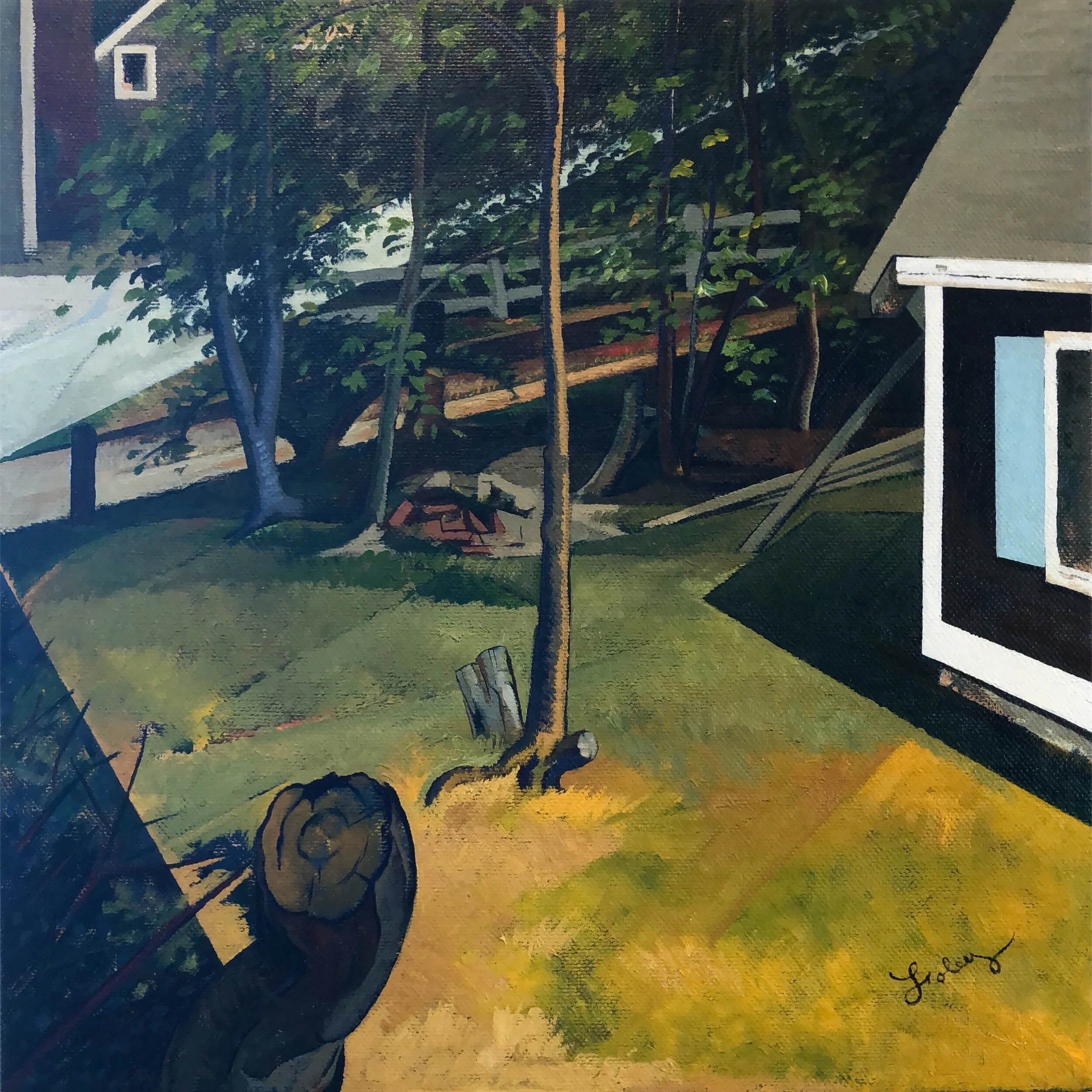
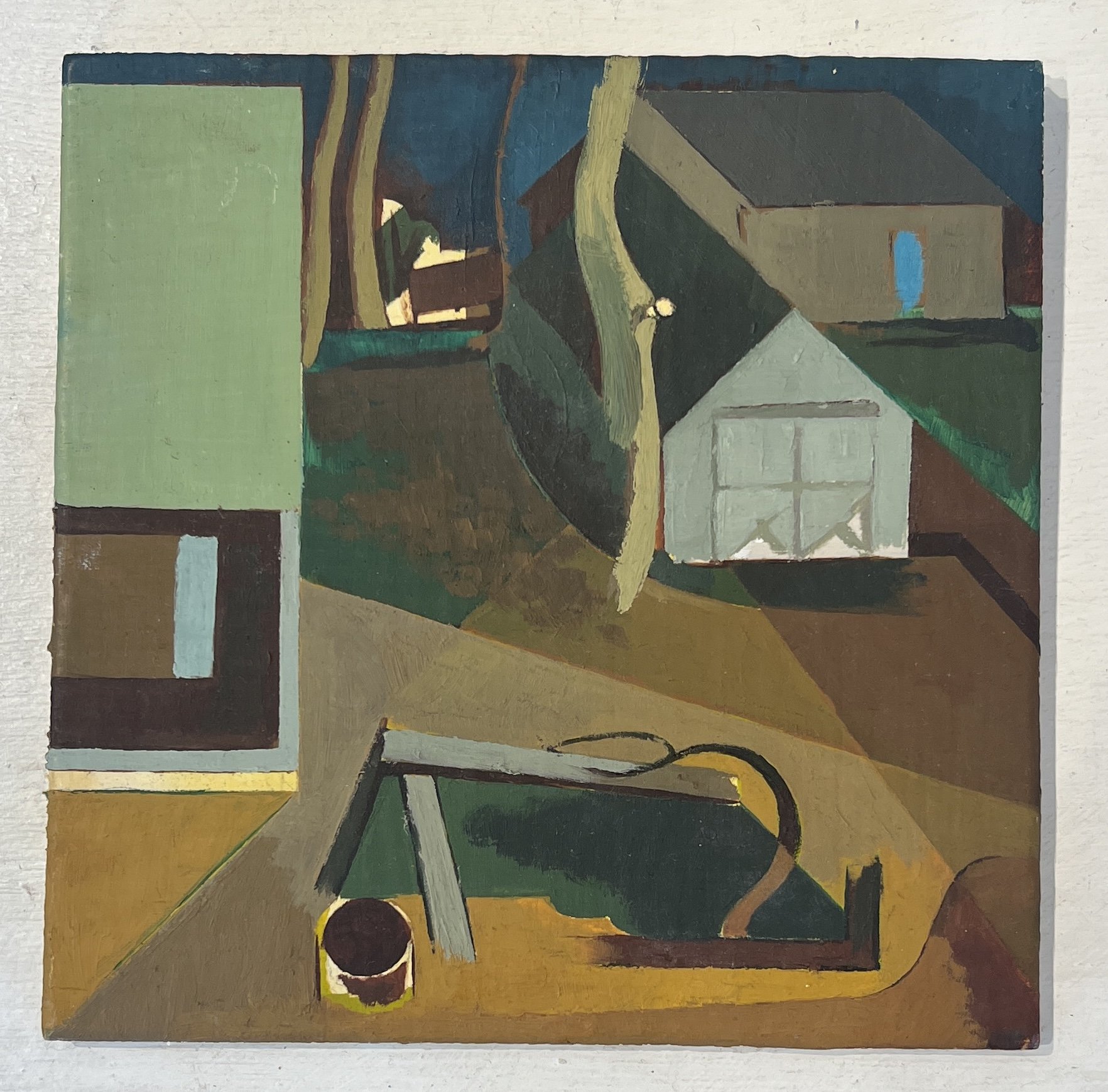
His work does not begin with a fixed idea. He tends to start with a mood, a shape, or sometimes just a color. Over time, forms emerge, interiors, vessels, figures, landscapes abstracted almost beyond recognition. He has come to trust the process, to allow for detours and accidents, which often lead to the most honest parts of a piece. He rarely uses black straight from the tube, but he discovered a hue made from phthalo blue, raw umber, and yellow ochre that now threads its way through many of his paintings. It is a color that holds depth without flatness, and somehow feels like home.
There is no single story he tries to tell in his paintings. If anything, he is more interested in atmosphere, what lingers in a room after someone leaves, or what shifts when a certain light touches an object. People tell him his work has a quiet, haunting quality, and maybe that is true. What matters to him is that the work invites someone in, that it makes space for looking closely.
These days, he paints in a shared studio above the Provincetown Post Office with a couple of close friends. His path has not been linear, but he has found something sustaining here. Painting remains a way to pay attention, to stay present, and to engage with the world as it changes around him and within him.